
Building Our Early Prototype — Challenges and Wins
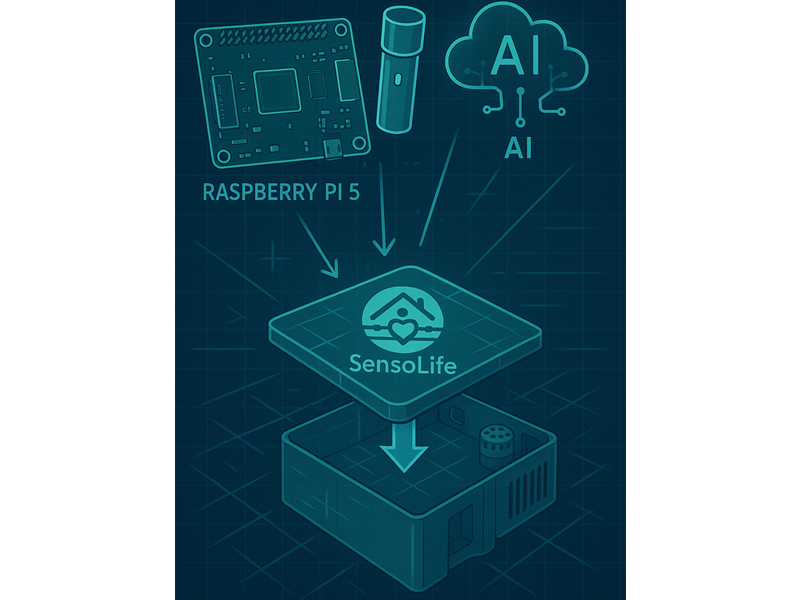
Every product starts with an idea. But in the case of SENSOLIFE, that idea had to do more than work — it had to listen, understand, and gently support elderly users in their daily routines, all without overwhelming them.
This month, we reached a major milestone: the completion of our first working SENSOLIFE prototype. It’s not yet beautiful. It’s not polished. But it speaks, it listens, it thinks — and most importantly, it respects its user.
Here’s how we got there.
Engineering a Companion, Not a Gadget
The foundation of the prototype was built on a Raspberry Pi 5, chosen for its compact size, power efficiency, and community-supported flexibility. Around it, we layered carefully selected components:
- Dolby-grade microphones for accurate voice capture
- Basic TTS + STT stack: OpenAI’s Whisper for real-time transcription, and PIPER for voice response
- Edge-first architecture: core speech handling is done locally, with fallback to cloud AI when needed
- HDMI out for optional TV integration — essential for low-vision users
This wasn’t about showing off specs. It was about making something quietly intelligent and perfectly suited to senior users, many of whom had never used a smart device before.
What We Got Right — And What We Didn’t (At First)
What worked:
- Local transcription with Whisper ran more smoothly than expected, even on low-powered hardware.
- Initial tests in Portuguese and Spanish accents were promising.
Elderly users responded positively to the voice’s tone and pace, even in early trials.
What needed fixing:
- Microphone sensitivity had to be rebalanced — it was too focused and ignored softer, distant voices.
- Heat dissipation needed improvement — we later added a copper heatsink and a silent fan.
- Network fallback logic was messy: if the cloud server lagged, users experienced long pauses (this is now resolved).
This wasn’t just iteration. It was immersion — listening to how elders interact, pause, question, and repeat, and learning from every moment.
From Component to Character
Beyond technical specs, we had to give SENSOLIFE a personality. Not a robotic one. Not fake cheerfulness. But something calm, consistent, and always present.
We trained the voice model to:
- Avoid rapid speech or complex phrasing
- Offer affirmations and clarity, not commands
- Handle interruptions with patience — a real issue for seniors with memory challenges
Every detail mattered. Because to be helpful, SENSOLIFE had to feel emotionally safe.
Rapid Prototyping in a Living Lab
Instead of hiding behind lab walls, we set up a living lab environment — testing the prototype inside residential settings, where actual background noise, conversation styles, and household conditions shaped each iteration.
This agile setup let us make weekly improvements, without waiting for months-long redesign cycles.
And slowly, the device began to shift from “project” to presence.
The First of Many
This early prototype is just that — a first. But it proved that a voice-first, elderly-centered device can be built without compromise, even on constrained hardware and limited connectivity.
From here, we move to product industrialization, enclosure design, interface refinement, and integration of more nuanced AI features (like personal behavior modeling). But we’ll never forget Prototype #1 — assembled by hand, tested in real homes, and built not just to work, but to care.