
Educational Spotlight: Why Early Cognitive Warnings Matter
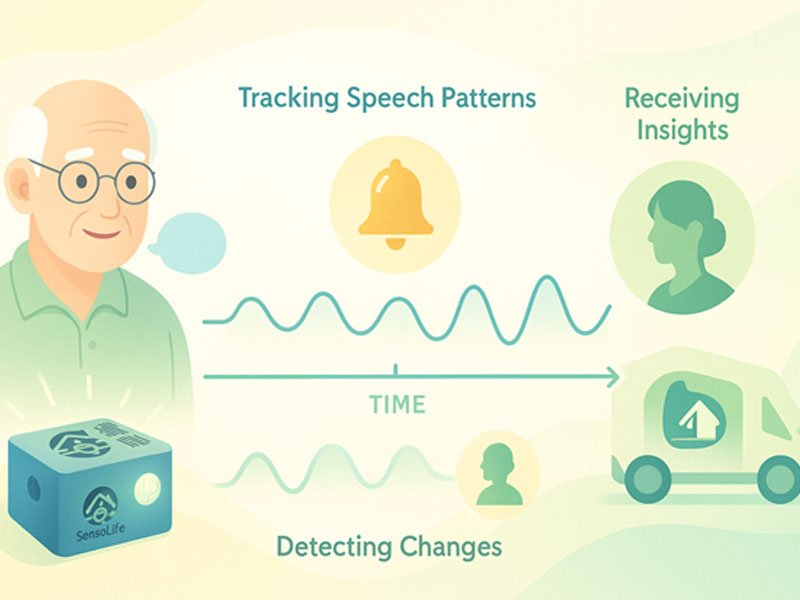
There is a quiet truth that families often miss — not because they don’t care, but because they simply don’t know what to look for.
A missed word here. A longer pause there.
Minor slips in speech or memory that seem harmless — until they aren’t.
This month, we want to pause our rollout stories and instead focus on something just as important: education.
Because when it comes to cognitive decline, awareness is the first form of care.
What Is “Early Cognitive Change”?
Cognitive change doesn’t begin with obvious forgetfulness. It often starts with subtle, slow-moving shifts like:
- Longer hesitation before answering simple questions
- Using filler words more frequently
- Repeating the same sentence structure
- Trouble articulating thoughts under stress
- Uncharacteristic silence during routine interactions
These are patterns. And like most patterns, they don’t stand out in a single moment — they emerge over time.
The Role of Daily Conversation
Most clinical tests for dementia or Alzheimer’s are snapshot-based — short questionnaires, administered once every few months.
But our voices are continuous records of mental agility.
Every conversation is a window into how our brain is organizing, retrieving, and expressing thought.
That’s where non-clinical tools like SENSOLIFE play a unique role:
They create daily, natural conversations — and gently track how those conversations change.
Without labels. Without stress. Without judgement.
Why Non-Medical Tools Matter
Let’s be clear: SENSOLIFE is not a diagnostic system. It doesn’t replace doctors or clinicians.
But it does offer families and caregivers something invaluable:
Continuity — small insights gathered over weeks, not seconds
Context — speech analyzed in real-life, relaxed environments
Confidence — that subtle concerns aren’t being missed due to long intervals between check-ins
We believe that the best care doesn’t begin in a hospital — it begins at home, with presence and awareness.
What the Data Shows
Early analysis of SENSOLIFE’s voice interaction logs (anonymized and processed securely) shows that:
- Small timing shifts (e.g., pauses between words) can precede clinical symptoms by months
- Consistent reduction in verbal engagement is a predictive marker
- Family members often notice changes only after the system alerts them to patterns they hadn’t seen
This doesn’t mean we diagnose — it means we observe, and empower others to act sooner.
Empowering Families, Not Overwhelming Them
Our goal is not to create panic.
It’s to provide gentle signals:
“This week, your father seems to be responding a bit slower.”
“We noticed fewer conversational initiations from your mother this month.”
Paired with dashboards and weekly summaries, these signals help families stay in tune — and decide if clinical support is warranted.